





Introduction
The Dolomites, a UNESCO World Heritage site, are one of Europe’s most photogenic playgrounds for landscape and night-sky photographers. Stretching across the provinces of Belluno, Bolzano and Trento, this limestone range serves up jagged ridges, high alpine lakes and panoramic roads that climb into passes often spared from light pollution. If you want to combine a road trip, some hiking and star-filled nights, the Dolomites are hard to beat: winding roads with wide viewpoints, mountain huts reachable by car for easy night departures, and valleys that shelter genuinely dark skies perfect for capturing the Milky Way and summer nebulae.
This guide walks you through everything step by step: which roads work best by car or motorbike, which passes and rifugi offer the most photogenic framing for night-sky work, the best times of year and hours of the night for shooting, plus precise technical tips (settings, gear, composition). I’ll also include essential practical info: full addresses, approximate prices in euros, opening hours for tourist facilities, and local tips for respecting the environment and residents.
Whether you’re after a road sign perched on a pass beneath the Milky Way, a rifugio overlooking the Tre Cime di Lavaredo, or a mountain lake mirroring the stars, preparation is key. Some spots are drive-up with paid parking while others require a half-hour to multi-hour approach on foot. Weather changes quickly at altitude and nocturnal visibility depends not just on conditions but also on the lunar phase and nearby artificial lights. In this guide I highlight the best routes and spots with concrete locations: Passo Giau, Passo Falzarego and the road to the Tre Cime with the Rifugio Auronzo car park, plus iconic lakes like Lago di Braies (Pragser Wildsee). For each you’ll find addresses, indicative hours, prices and tips to make the most of your night sessions.

Finally, this article is designed for field use: keep a printed or offline copy, note GPS coordinates and follow local rules (e.g. no wild camping, rifugio regulations). The Dolomites reward patience: staying put for a few hours around dusk greatly increases your chances of capturing vivid starfields and unique light panoramas.
Must-drive scenic routes to position yourself for night shots
For astrophotography, your first task is to pick a road that takes you to high, open locations where the horizon is clean and light pollution is minimal. Three drives stand out in the Dolomites: the SP638 via Passo Giau, the SS48 via Passo Falzarego, and the access road to Rifugio Auronzo (Tre Cime di Lavaredo). These roads offer roadside parking, viewpoints and easy walk-on access to ridges or lakes.
Passo Giau — Address: Passo Giau, SP638, 32041 Cortina d’Ampezzo BL, Italy. This narrow mountain road links Cortina d’Ampezzo to Colle Santa Lucia. Generally open from May to November depending on snow, the pass reaches about 2,236 m altitude and features several parking areas, including a main lot close to the statale. Price: parking is often free outside peak season, otherwise around €5–€10 per day depending on the local operator. Hours: the road is open 24/7 when cleared; watch for winter closures. The pass offers wide views toward the Nuvolau range and Monte Civetta — ideal for compositions with the Milky Way rising behind the peaks.
 Click here to book your spectacular Passo Giau loop

Passo Falzarego and the Lagazuoi Cable Car — Address: Piazzale Falzarego, 1, 32020 Cortina d’Ampezzo BL, Italy. The SS48 crosses this historic pass and the Falzarego plateau. A major advantage is the Funivia Lagazuoi (cable car) that climbs to 2,778 m. Cable car price: roughly €28 round-trip (indicative, seasonal). Hours: typically 08:30–17:30 in summer; the lift may run earlier or later for special events—check in advance. For astrophotography, start from the Piazzale Falzarego car park (address above) in late afternoon to set up your gear; using the cable car for part of the ascent shortens the approach to wide panoramas and high positions, reducing light pollution.
Click here to book a guided hike to Lagazuoi
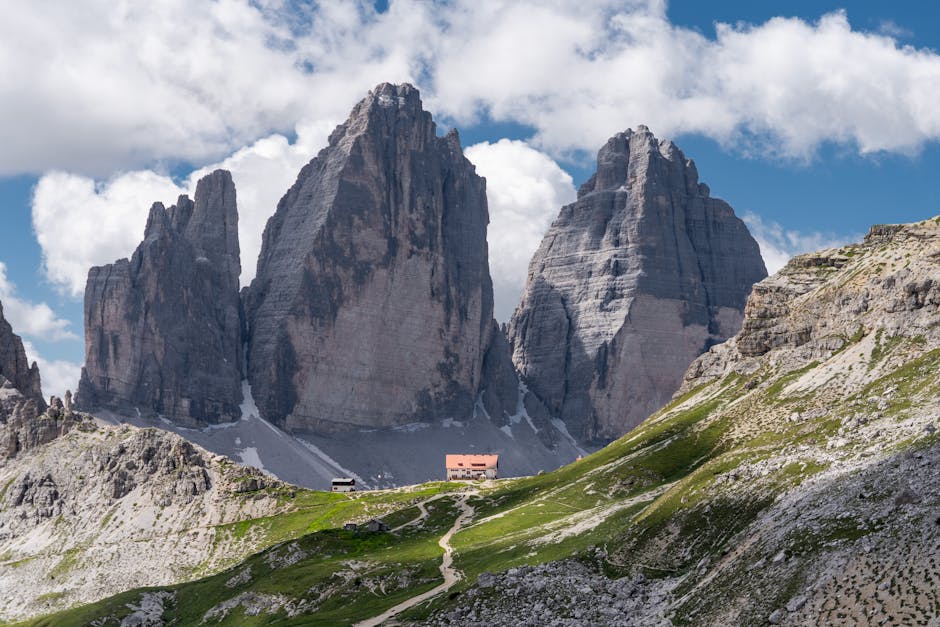
Road to Rifugio Auronzo / Tre Cime di Lavaredo — Address: Rifugio Auronzo – Località Lavaredo 3, 32041 Auronzo di Cadore BL, Italy. The paved access to the Rifugio Auronzo parking is paid but very convenient for night photographers who want to avoid a long trek. Parking fee: around €30 per car in high season (fee charged for the road to Rifugio Auronzo, confirm locally). Hours: the road is often open 24/7 in summer but the toll booth/office may have limited hours; access can sometimes be closed at night for safety—check with the local tourist office. From the rifugio, the platforms around the Tre Cime deliver iconic compositions with the three peaks silhouetted against the Milky Way.
Exact astrophotography spots: lakes, rifugi and passes
Beyond the roads, certain Dolomite spots are must-visits for memorable night images. Here are concrete locations with addresses, approach tips and what to expect photographically.
Lago di Braies (Pragser Wildsee) — Address: Lago di Braies, Str. Prags, 15, 39030 Braies BZ, Italy. This turquoise lake is famous at sunrise, but at night it reveals incredible reflections when the water is calm. Access: main lakeside car park (paid). Parking fee: €3–€6 for a few hours depending on season; rowboats available (roughly €15–€20 per hour). Hours: access is generally open 24/7, though restrictions exist to limit disturbance to residents—avoid wild camping and keep sessions quick and respectful. For astrophotography, position yourself on the west shore to include the wooden jetty as a strong foreground; long exposures will show the stars mirrored on the lake surface.
Click here to book a day trip to Lake Braies
Rifugio Auronzo / Tre Cime di Lavaredo — Address repeated: Rifugio Auronzo, Località Lavaredo 3, 32041 Auronzo di Cadore BL, Italy. From the rifugio, the platforms and trails around the Tre Cime produce classic compositions: rocky foregrounds, sharp silhouettes and a rising starry sky. Practical tip: arrive late afternoon, tune your gear during the blue hour and wait until astronomical twilight ends for long exposures. Respect rifugio closing times: most serve food until around 20:00–21:00 and offer dorms or rooms (prices vary; meals roughly €15–€25, overnight €30–€80 depending on accommodation type).
Click here to discover guided rifugio options at the Tre Cime

Marmolada Pass / Punta Rocca viewpoint — Address: Funivia Marmolada – Passo Fedaia, 2, 32020 Rocca Pietore BL, Italy. The Marmolada, considered the « roof of the Dolomites, » offers high vantage points and glaciers. Lake Fedaia at the foot of the pass is an excellent water surface for night reflections. Cable car/museum prices vary; parking often €5–€10. Hours: the cable car usually runs daytime; the area is accessible at night for photo outings but be cautious of cold temperatures and mountain weather.

Techniques and practical tips for mountain astrophotography
Shooting stars in the mountains demands a bit more technical preparation than on flatlands: low temperatures, wind, humidity swings and sometimes tricky access. Here are hands-on tips, from gear selection to camera settings and safety.
- Recommended gear: a capable APS-C or full-frame body with good high-ISO performance, a fast wide-angle lens (14–24 mm f/2.8 or f/1.8 to f/2.8), a sturdy tripod, remote release or intervalometer, spare batteries (cold drains batteries quickly), and a red-headlamp to preserve night vision.
- Basic settings: ISO 1600–6400 depending on sensor capabilities, widest aperture possible, exposure time limited by apparent star movement (500 rule: 500 / focal length equivalent = max seconds before trails), manual focus set to infinity or focused on a bright star using live view magnification.
- Stacking and noise reduction: for starry landscapes, either use a single long exposure or stack multiple shorter frames in post to cut noise. If the Milky Way is bright against a foreground, consider shooting two exposures (one for the sky, one for the foreground) and blend them in post.
- Useful apps: Stellarium, PhotoPills or Sky Guide to plan Milky Way position and astronomical twilight; MeteoBlue and Windy for mountain weather and wind forecasts.
Safety and etiquette: dress in layers, pack thin touchscreen-capable gloves, tell someone your route if you head out alone, and follow national park rules (no open fires, no wild camping where prohibited). Keep noise to a minimum: don’t disturb other hikers or rifugi. Finally, prefer moonless nights for higher contrast skies, or use a rising moon to sculpt the landscape if you want a less dark foreground.
Local practical information: lodging, food and transport
Planning your trip around astrophotography sessions means picking accommodations that are well placed and open in season. Here are trusted places and services with addresses, price ranges and opening hours to organize your nights.
Rifugio Auronzo — Address: Rifugio Auronzo, Località Lavaredo 3, 32041 Auronzo di Cadore BL, Italy. Hours: usually open from late May to October; kitchen until 20:00, 24-hour reception for reserved overnight guests. Prices: dorm/bed in a rifugio €30–€80 depending on bed type; meal price €15–€25. Book well in advance for high season.
Cortina d’Ampezzo (logistics base) — Tourist Office: Corso Italia, 37, 32043 Cortina d’Ampezzo BL, Italy. Hours: 09:00–18:00 in season; they provide maps, road conditions and taxi/guide contacts. Charming hotels and rentals range from €70 to €300 per night depending on comfort. Transport: local buses serve major passes during the day (schedules vary). For night operations, renting a car or joining a local guide is often safer.
Transport and parking: most passes have parking managed by towns or private operators. Expect fees between €3 and €30 depending on location and season. Main roads (SS48, SP638) are maintained but can close in winter; check road conditions and toll booth opening hours for access to high-altitude car parks.
Click here to book a private transfer from Venice to Cortina
Click here to book an airport–Cortina express bus ticket

Environmental respect and good nighttime practices
The Dolomites are a fragile ecosystem; as a photographer you have a part to play in minimizing impact. Here are simple rules to follow so you can enjoy shooting while preserving the area.
- Park only in authorized areas: roadside verges and alpine meadows are often protected. Use designated car parks.
- Responsible lighting: prefer red light on headlamps and keep intensity as low as possible to avoid disturbing wildlife and other photographers.
- No open fires: fires are prohibited in most protected zones; use certified stoves only in rifugi when allowed.
- Respect rifugi: avoid setting up right outside entrances and observe quiet and service hours.
By following these rules you help preserve the dark skies that make astrophotography possible. The Dolomites deliver incredible images, but their future also depends on respecting the people who live and work there.
Conclusion
The Dolomites are a rare playground for the astrophotographer: scenic roads that lead quickly to ridges and lakes, rifugi accessible for night starts, and passes offering dramatic perspectives under starry skies. Combining the SP638 (Passo Giau), the SS48 (Passo Falzarego) and access to Rifugio Auronzo/Tre Cime di Lavaredo creates an itinerary full of visual possibilities, whether you’re after sharp mountain silhouettes against the Milky Way or lunar reflections on alpine lakes like Lago di Braies.
Technical preparation (gear, settings, planning apps) is as important as local knowledge (addresses, parking prices and cable car schedules). Have weather alternatives, respect rifugio opening hours and local regulations, and above all adopt a respectful approach that protects these remarkable landscapes. Nights in the Dolomites can be chilly and sometimes windy: appropriate clothing, spare batteries and traveling with a partner or group will improve your safety and photographic output.
Lastly, remember that each night session is unique: the wait at a pass or a lake, the Milky Way’s crawl across the sky, the subtle light on limestone spires — all demand patience and humility. Plan carefully and respect the places you visit, and you’ll leave not only with memorable images but with the satisfaction of having experienced a sensitive, sustainable adventure in the heart of the Dolomites.
