





Introduction: Why Dolomite villages are must-shoot photo destinations
The Dolomites, a UNESCO World Heritage site, provide a one-of-a-kind backdrop where villages look like they’ve been lifted straight from a postcard: wooden chalets, slender bell towers, alpine meadows and limestone peaks carved by time. Photographing these Dolomite villages is about capturing the meeting point of traditional alpine architecture and theatrically dramatic natural panoramas. Every hamlet has its signature “portrait” — a lane, a church, a lake or a mountain pass — that reveals the soul of the place depending on the light, the season and your shooting angle.
Beyond the iconic views, Dolomite villages offer a wide range of photographic opportunities: perfect mirror reflections on icy water, long twilight shadows across pastel facades, rustic farm details and candid scenes of daily life (shepherds, farmers, artisans). The best shots often come from careful observation: watch the weather (morning mist, low clouds, fresh snow), favour golden hours (sunrise and sunset), and be ready to explore on foot to find the lesser-known angles that make the difference.
In this guide I’ll walk you through several of the top photo spots in Dolomite villages — exact locations, practical directions, prices in euros (parking, museums, access) and opening hours. You’ll also find hands-on tips to frame like a pro: what lenses to bring, how to handle light, which details to prioritise, and how to be a responsible visitor. Whether you’re a beginner, a keen enthusiast or a pro, these pointers will help you plan successful, respectful shoots.
Pack light but smart: a small lightweight tripod, a wide-angle lens (16–35mm or equivalent), a telephoto to isolate patterns (70–200mm), ND and polarising filters, and crampons if you’re visiting in winter. Also bring warm clothes, comfy mountain boots and an offline map or GPS app — some hamlets have limited mobile coverage. Follow local parking advice and respect private signs to help preserve the authenticity of these places. Now, here’s a detailed, geolocated selection of the best photo spots in Dolomite villages.
1. Lago di Braies (Pragser Wildsee) and the hamlet of Braies – reflections and rowboats
The Lago di Braies, locally known as Pragser Wildsee, is one of the most photographed lakes in the Dolomites. Address: Strada di Braies, 24, 39030 Braies (BZ), Italy. Main access is via this parking: Parcheggio Lago di Braies, Strada di Braies 1, 39030 Braies. Note: during high season an online parking reservation system may be in effect. Indicative parking fee: €8–12 for the day (varies by season). The lake itself is free to visit, but vehicle access may incur charges during peak visitor periods.
Opening hours: the lake is accessible 24/7, but services (café, boat rentals) generally operate roughly 08:00–18:00 (May–September), with reduced hours off-season. Boat rental: about €12–20 for 30–60 minutes, depending on the period.
Immersive description: picture yourself at sunrise when the lake surface is a perfect mirror and the three colourful rowboats moored at the pier draw graphic lines across the water. The cliffs of the Gruppo delle Crode del Becco (Seekofel) reflect crisply, giving you that classic symmetrical composition. Top angles: the central pier for flawless reflections, the trail that skirts the shore for perspectives including the surrounding woods and access road, and the opposite bank to isolate the small wooden hut with mountains looming behind.
 Click here to book a yoga and hike session at the lake

Practical tips: arrive at least 45–60 minutes before sunrise in peak season to beat the crowds. Bring a tripod and a remote release for long exposures and perfect reflections. Use a polariser to boost sky colours and cut glare. In winter, wear crampons — the shoreline can be icy and slippery.
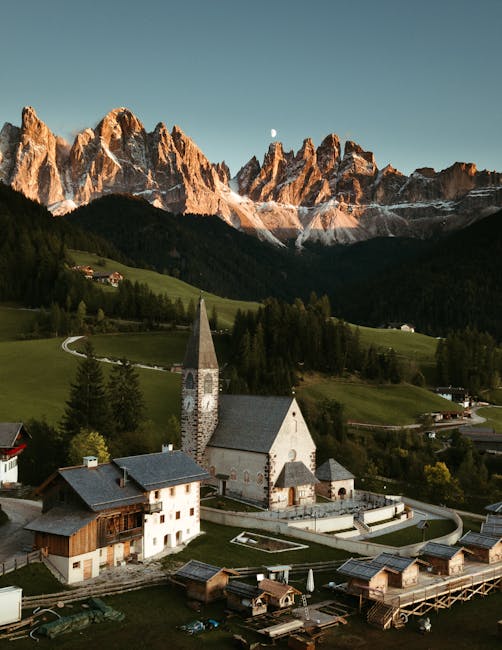
2. Santa Maddalena (St. Magdalena), Val di Funes – pastoral panorama and a lone bell tower
The small church of Santa Maddalena, often called St. Magdalena Church, sits in Ranui. Approximate address: Str. Ranui, 21, 39040 Santa Maddalena, Val di Funes (BZ). GPS: 46.6110° N, 11.6459° E. Parking: Ranui parking area, a few free spaces and village streets; local fees may vary. Access is free. Visiting hours: the church is generally open to visitors from 09:00 to 18:00 in summer; mass times are posted on the Parrocchia di Santa Maddalena website or on the local noticeboard.
Immersive description: this spot is a classic thanks to the dramatic juxtaposition of the slender bell tower against the vast Odle/Geisler peaks. In autumn the meadows turn golden, contrasting with the grey cliffs of the Dolomites. The best vantage point is along the main road (Strada della Val di Funes), where a small grove and clearing allow for a wide shot that includes the church, the pastures and the mountain range behind. The ideal time is the blue hour before sunrise, when pastel tones wash the sky and the bell tower cuts a sharp silhouette.
Click here to book a photo session with a professional photographer

Practical tips: use a wide-angle to capture the harmony between church and mountains, then switch to a telephoto to compress the scene and isolate the bell tower against the jagged peaks. Respect private property — several paths cross private pastures, so ask for permission if needed. Bring waterproof shoes for heavy morning dew.
3. Tre Cime di Lavaredo and the hamlet of Misurina – monumental peaks and an emerald lake
The Tre Cime di Lavaredo (Drei Zinnen) dominate a spectacular alpine landscape. A popular starting point is Lago di Misurina, address: Via Lago di Misurina, 1, 32041 Auronzo di Cadore (BL). Parking Auronzo: Passo Tre Cime, 32041 Auronzo di Cadore (BL). Access road fee (Auronzo ring road): about €30 (per car) for access to the Tre Cime area, valid for the day (seasonal rates apply). Opening hours for the road: typically 08:00–20:00 in summer, with reduced access in winter depending on snow.
Immersive description: from the Auronzo car park, a walk or a short shuttle brings you to viewpoints with a frontal, postcard-perfect view of the three majestic towers. The most photogenic stretch is the trail that runs along the base of the Tre Cime, where perspectives shift with every step. Nearby Misurina Lake provides reflection shots at dawn and dusk. Warm evening light casts low rays that emphasise the vertical strata of the cliffs.
Click here to book the guided hut tour around Tre Cime
Practical tips: weather changes fast — pack warm layers and wind protection. In high season start early (before 07:00) to avoid buses and catch gentler light. Bring a spare battery: long hikes at altitude drain power. Stick to marked trails to protect fragile alpine vegetation.
4. Alpe di Siusi (Seiser Alm) and Ortisei – rolling pastures, rosy evenings and alpine lanes
The Alpe di Siusi (Seiser Alm) is Europe’s largest high-altitude meadow and offers endless panoramas, with charming towns like Ortisei (Urtijëi) in Val Gardena. Alpe di Siusi cable car base: Seiser Alm Bahn, Via S. Antonio 30, 39046 Ortisei (BZ). Seiser Alm Bahn ticket office: typically open 08:00–18:00 (hours vary with season). Cable car fare: around €18–30 return per adult (seasonal prices and discounts may apply).
Immersive description: from the hills of Alpe di Siusi you’ll capture carpets of wildflowers in summer and golden glows at sunset. Isolated wooden chalets on the meadows stand out against the Sassolungo and Sasso Piatto massifs. In Ortisei, Via Luis Trenker and Corso della Vittoria showcase beautifully painted facades, artisanal shops and cafés that multiply urban compositional options. Evening light makes ochre facades glow while the mountains silhouette behind the houses.
Click here to book a photo session on Alpe di Siusi
Practical tips: for wide panoramas use a wide-angle and position a chalet in the foreground to give a sense of scale. To isolate details, explore Ortisei’s lanes early in the morning when woodcarving shops are opening. In winter check road conditions and bring snow chains if needed; in summer wear UV protective sunglasses and carry water for hikes.
5. Passo Giau, Cortina d’Ampezzo and San Vito di Cadore – mountain passes, sweeping views and alpine architecture
The Passo Giau (2,236 m) is a classic pass offering wide-open views of the surrounding massifs. Pass address: Passo Giau, 32043 San Vito di Cadore (BL). There’s parking at the summit, usually free but sometimes crowded. From there the winding road down toward Cortina d’Ampezzo (Corso Italia, 9, 32043 Cortina d’Ampezzo, BL) reveals spectacular viewpoints. Tourist office hours: Ufficio Turistico Cortina d’Ampezzo, Corso Italia 29, typically open 09:00–18:00. Check seasonal opening times for hotels and attractions.
Immersive description: from Passo Giau you can photograph layer upon layer of peaks, serpentine roads and, on some days, carpets of low clouds. These views are especially photogenic at dawn and late afternoon when grazing light carves deep shadows. In Cortina d’Ampezzo, Corso Italia and Piazza Venezia display elegant alpine architecture and well-kept facades — ideal for urban portrait series or lifestyle shots from a café terrace.
Click here to book the guided Passo Giau loop

Practical tips: check the weather before ascending — visibility and cloud cover will completely change the mood. Carry graduated ND filters to balance sky and foreground. In Cortina central parking is paid (blue zones): expect €1.50–2.50/hour; several covered car parks offer day rates.
Conclusion: Plan your shots — and respect the landscape
Photographing Dolomite villages requires a mix of logistical preparation, sensitivity to place and respect for local communities. The practical details provided — exact spots, addresses, hours and prices — make planning easier, but a successful shoot mostly depends on observation and adaptation: pick the right hour, know the weather, and favour slow approaches to capture authentic moments instead of crowded tourist clichés.
Gear and technique matter: tripod, filters, varied lenses and weather protection help you make the most of changing light and alpine conditions. But don’t forget the human and ethical side: ask permission before photographing private property, avoid blocking paths and obey signage. Preserving the landscape also means small gestures — take your rubbish with you, avoid trampling fragile vegetation, and support the local economy by buying from the cafés and family-run guesthouses you photograph.
Finally, give yourself time to return: Dolomite villages transform dramatically with the seasons. The same bell tower, lake or ridge will offer fresh compositions depending on snow cover, spring blooms, autumn colours or a soft morning mist. With patience and curiosity you’ll build a body of images that tells the rich, poetic story of the Dolomites — a visual narrative at once intimate and grand.