





Introduction: The Dolomites and the Soul of UNESCO-Listed Villages
The Dolomites, inscribed on the UNESCO World Heritage list since 2009 under the heading “Pale di San Martino, Dolomites” (and more broadly as “Dolomites” for several massifs), are more than a succession of vertiginous peaks and pale limestone slopes. They host villages that look as if they’ve been lifted from a storybook, where every stone speaks of alpine cultures, Ladin traditions, woodworking crafts and pastoral life. These villages—either included within the inscribed area or located inside the UNESCO buffer zone—offer a rare combination: outstanding geological landscapes paired with a living human heritage, with architectures, churches, squares and age-old practices seamlessly woven into the scenery.
This guide focuses on several emblematic villages within the UNESCO Dolomites, highlighting their landmarks, exact addresses, opening hours, indicative prices and local practical tips. The aim is to give the curious traveler not just logistical information to plan visits, but immersive descriptions to feel each place’s unique atmosphere — the bell tower piercing the morning mist, the cobbled lane echoing Ladin dialect, the alpine farm where cheese is aged, the sunset viewpoint that makes the dolomite rock glow like pink marble.
In the sections that follow you’ll find detailed portraits of must-see villages and monuments: Santa Maddalena (St. Magdalena) in the Val di Funes, Ortisei (Urtijëi) and access to the Alpe di Siusi/Seiser Alm, Cortina d’Ampezzo with its churches and alpine museums, plus a focus on more intimate villages like San Cassiano (San Cassiano in Alta Badia) and Colfosco — witnesses to Ladin life. For each I give precise contact details (postal address), typical opening hours, any access fees where applicable, plus practical tips: best times for photography, how to avoid crowds, where to find a traditional cafe or local specialty, and small tricks for getting around in a territory sometimes subject to weather constraints and seasonal variations.
Please note that the prices and schedules mentioned are indicative and can vary by season (high summer or winter) and on public holidays. I recommend checking official websites or calling local tourist offices before you travel. Finally, to help you visualize these landscapes and cultural objects, I’ve included visual suggestions — image cues designed to be easily sourced from free image banks (Pexels, Pixabay, Unsplash) to illustrate your travel journals or posts.
Santa Maddalena (St. Magdalena) — the iconic church of Val di Funes
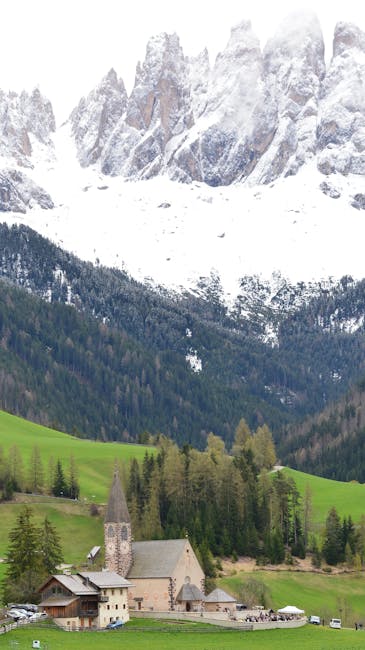
The little church of Santa Maddalena (Chiesa di Santa Maddalena), often photographed with the jagged Odle (Geisler) group behind it, is one of the most powerful photographic symbols of the Dolomites. Location: Chiesa di Santa Maddalena, 39040 Santa Maddalena, Valle di Funes (BZ), Italy. The church sits on provincial road SP14 and is easy to spot from the village square. The scene — a slender bell tower set against rocky spires — changes with every hour and season: morning mist, golden evening light, or pristine winter snow.

Description and immersion: the current chapel largely dates from the 18th century, built on older foundations. The bell tower — a valley landmark — overlooks a pastoral landscape where cows still graze, providing milk for the region’s famous cheeses. When you arrive, leave your car in the small roadside parking and walk across the lawn to the beige-plastered facade. Take a moment to listen: wind through the firs, the tinkling of bells, and if you’re lucky, the hymn from a local mass.
Hours and access: the Chiesa di Santa Maddalena is generally open to the public every day; opening times vary with religious services:
- Open access: 08:00 – 19:00 (approximate, season-dependent)
- Sunday service (Messa): around 10:00 – 11:00 on Sundays (check the local church for confirmation)
There is no admission fee to view the exterior or enter the church; voluntary donations are appreciated. Parking: a small free lot near the church but space is limited in high season (July–August and December–January).
Practical tips:
- Best time for photos: sunrise or late afternoon for warm light on the Odle peaks.
- Avoid peak tourist hours (10:00–16:00) if you want shots with fewer people.
- Be respectful during services: take photos discreetly and dress appropriately if you enter the church.
- Wear good shoes for walking on dewy grass in the early morning.
Ortisei (Urtijëi) and Alpe di Siusi/Seiser Alm — craftwork, woodcarving and sweeping views
Ortisei, or Urtijëi in Ladin, is the largest town in Val Gardena and an important cultural hub for woodcraft in the Dolomites. Main tourist office address: Ufficio Turistico Ortisei – Val Gardena, Piazza Stazione 1, 39046 Ortisei (BZ), Italy. The village is famous for its master woodcarvers, studios, artisan shops and colorful facades. The main pedestrian street, via Longega (the principal shopping street), is full of traditional shops and cafes where you can try kaiserschmarrn or an apple strudel.

Monuments and places of interest:
- Funivie Ortisei – Seceda cable car (Piazza Stazione 7, 39046 Ortisei): cable car up to Seceda and the Alpe di Siusi. Indicative hours: 08:15 – 17:00 in summer (weather-dependent). Price: around €25–€30 round trip per adult (varies by season and ticket type).
- Gallery Vincenzo Friedrich and several woodcarving workshops (various addresses along via Jëuf): often open 09:00–18:00, some close between 12:00–15:00 for lunch.
- Chiesa di San Giacomo (Parish Church of St. James, Piazza Sant’Antonio, 39046 Ortisei): the local parish with baroque ornamentation, typically open 07:00–19:00.
Immersive experience: take the funivia (cable car) from Piazza Stazione up to Seceda for a ride that lets the landscape breathe. The meadows of the Alpe di Siusi (Seiser Alm) offer wide panoramas and easy walking trails. In autumn the pastures turn golden, and in winter the area becomes a ski domain. The sculptors’ workshops in town are a treasure: watch a master carve an alpine figure, breathe in the scent of freshly sanded wood and bring home a small handcrafted memento.
Practical tips:
- Book cable car tickets online in high season to avoid queues.
- Bring a windproof jacket: the summit is often cooler and windier, even in summer.
- If you visit workshops, ask permission before photographing: many artisans are happy to allow photos but prefer to be asked.
- Where to eat: Restaurant Tublà da Nives (Rifugio) on Seceda or valley cafes to try Ladin dishes like « tirtlan » (savory pastry) and « casunziei » (red ravioli) — main course prices in town: €12–€25.
 Click here to book a photo session on the Alpe di Siusi
Cortina d’Ampezzo — alpine-chic allure and religious heritage
Cortina d’Ampezzo is perhaps the best-known alpine resort in the Dolomites for its blend of luxury and mountain traditions. Useful address: Ufficio Turistico Cortina d’Ampezzo, Corso Italia 66, 32043 Cortina d’Ampezzo (BL), Italy. Beyond high-end shops, Cortina offers many historic walks and interesting religious sites.
Monuments to visit:
- Basilica Minore dei Santi Filippo e Giacomo (Piazza Angelo Dibona 1, 32043 Cortina d’Ampezzo): the town’s main church, with a modest facade and decorated interior, usually open 09:00–18:00. Free entry; donations welcome.
- Museo all’Aperto delle 5 Torri and World War I memorial areas (Strada delle 5 Torri): accessible via a short trip from Cortina. Some local museums charge admission: €5–€12 depending on the exhibition.
- Funivia Faloria (Via Faloria, Cortina): cable car offering panoramic views of the Tofane. Hours: 08:30–17:00 in summer; indicative price €15–€25 round trip.
Immersion: wander along Corso Italia, admire shop facades and the mountains framing the town. In the late afternoon, head up to the Faloria viewpoint for a sunset that paints the Tofane pink. Side streets reveal chapels and old houses often decorated with frescoes or artisan signs.
Click here to book a guided snow excursion in Cortina

Practical tips:
- Parking: several paid lots in town (for example Parking Col Tondo), plan for €2–€3/hour depending on location.
- Budget: terrace coffee €2.50–€4; lunch €15–€30 per person. High-end restaurants can exceed €60 per person excluding wine.
- Transport: local buses connect Cortina with neighboring valleys; in winter, use winter tires or carry chains if driving.
San Cassiano, Colfosco and La Val / Alta Badia — the Ladin heartland
Alta Badia is a region where Ladin language and culture remain very present. San Cassiano (San Cassiano in Badia) and Colfosco (Kolfuschg) are two charming villages often used as bases to explore the Piz Boè and Marmolada massifs. Alta Badia tourist office address: Alta Badia Tourist Office, Str. Colz 34, 39036 La Villa (BZ), Italy, although each village has its own welcome point.

Points of interest and monuments:
- Chiesa di San Cassiano (Piazza San Cassiano, 39036 San Cassiano): small parish church with local frescoes; often open 08:00–18:00; free entry.
- Colfosco (Kolfuschg) Church (Via Colfosco, 39033 Corvara in Badia): a picturesque village tucked at the foot of the mountains, ideal for hikes and gourmet shopping.
- Passo Gardena and trails into the Puez-Odle / Puez-Geisler Nature Park: parking and access are free, but some protected areas require you to stay on marked trails.
Immersion and atmosphere: in San Cassiano and Colfosco life seems to follow the pastoral seasons. Families share recipes passed down through generations: alpine-aged cheeses, cured meats, sourdough breads. Carved wooden houses and flower-boxed balconies make for highly photogenic scenes. In the afternoon you can sip a cappuccino in a stube (traditional room) and listen to tales of local folklore.
Practical tips:
- Cultural touch: try a few words in Ladin (for example « bun dì » for hello); locals appreciate the effort.
- Hiking: carry a map and water — mountain weather changes fast; hiking boots recommended.
- Gastronomy: taste the « speck » (Tyrolean smoked ham) and local cheeses. A platter of specialties costs €10–€18 depending on the place.
- Reservations: in high season, book restaurants and accommodation several weeks ahead.
Click here to book a half-day Sellaronda tour
More secret villages and less-traveled routes — tips for an authentic discovery
Beyond the flagship villages, the Dolomites offer lesser-known hamlets that deserve attention for their authenticity: Antermoia (Antermoia in Val di Fassa), Villabassa (Niederdorf) in Pusteria, and the small cluster of Pederoa near La Val. These places don’t always appear on major tourist circuits, and that’s precisely their value: tranquility, genuine encounters and traditional rhythms. Secondary roads, transhumance paths and minor municipal roads bring you close to local life without the tourist crowds.
General practical tips for these villages:
- Transport: a car gives the greatest freedom, but some mountain roads can be narrow. Rent a suitable vehicle and check your insurance for mountain terrain.
- Fuel and services: high-altitude gas stations are rare; fill up in larger towns (Bolzano, Brunico) before taking secondary roads.
- Ecological respect: follow natural park rules (don’t pick protected plants, keep dogs on leashes, carry out your trash).
- Money: while cards are increasingly accepted, some small businesses only take cash; always carry a few euros.
Recommended experiences:
- Attend a local « sagra » (village festival) to hear music and taste regional dishes: usually held between May and September.
- Visit an alpine pasture in summer to learn how mountain cheeses are made and sometimes buy directly from the producer (price of an artisanal cheese: €8–€25 depending on size and aging).
- Wake up early to watch the light transform the dolomitic walls at sunrise — a mostly free spectacle that requires discipline and an early alarm.
Click here to book a guided hike with tasting

Practical travel advice — seasons, accommodation and safety
Understanding seasonality is essential for planning a successful stay in the Dolomites. Summer (June–September) is ideal for hiking, mountain huts and alpine farms; winter (December–March) is the high season for snow sports, with well-equipped ski areas but sometimes trickier roads. Spring and autumn offer calmer atmospheres, spectacular colors and often gentler prices.
Click here to book an express bus from Venice to Cortina

Accommodation:
- Historic hotels and « garni » (guesthouses): prices vary, breakfast often included. Budget: €70–€150 per night for a double room in good mid- to high-quality small hotels.
- Agritourism and mountain rifugi (huts): immersive experiences; a night with meals in a refuge costs €40–€100 depending on comfort and season.
- Apartments and chalets: ideal for families and longer stays; weekly rates in high season can exceed €1000 for a well-located chalet.
Safety and health:
- When hiking, always tell someone your route and carry a map, compass/GPS, water and energy snacks.
- Check local weather forecasts: mountain conditions can change quickly.
- Emergency numbers: the European number 112 works in Italy; mountain rescue (CNSAS) can be contacted for high-altitude rescues.
Language and communication:
- Italian and German are widely spoken; Ladin is present in several valleys. English is common in tourist areas but less so in isolated hamlets.
- Learn a few basic phrases in Italian or Ladin; it eases interactions and is often greatly appreciated by locals.
Conclusion: Why visit these UNESCO-listed villages and how to bring their charm home
Visiting the villages of the Dolomites, whether they lie within the UNESCO World Heritage boundaries or in the buffer zone, gives you access to an experience that goes beyond admiring grand landscapes. It means stepping into a human tapestry where architecture, language, cuisine, craft and pastoral practices have adapted over centuries to a demanding environment. For the traveler, every bell tower, alley, woodcarving studio and alpine farm is an opportunity to learn — not only about the spectacular geology of the Dolomites but about the resilience and creativity of the communities who live there.
Taking home the local charm also means respecting it: leave no trace, support local initiatives (buy crafts, eat in family-run restaurants), and document without distorting. The addresses and practical information in this guide — from the Chiesa di Santa Maddalena to Ortisei’s cable cars, Cortina’s museums to the Ladin villages of Alta Badia — are starting points to build an itinerary that blends sweeping panoramas with intimate encounters.
Finally, remember that authenticity sometimes requires patience: rise at dawn for crowd-free panoramas, linger for a terrace chat with an artisan, come back off-season to rediscover a place under different light. The Dolomites, as a world heritage site, offer that rare gift: extraordinary natural scenery coupled with a living cultural legacy. Plan carefully, respect local communities and let curiosity lead — you’ll leave with far more than photos: lasting impressions, flavors and stories that will extend the trip long after you return.