





Introduction: the pull of pink rock and forgotten lanes
The Dolomites are famous worldwide for their sheer cliffs, endless green pastures and skies so clear you feel you could touch the stars. Yet beyond the popular routes and well-known resorts lies a web of secret villages where time moves slower — where every carved door, church bell and fountain tells a story you won’t find on a postcard. This article is an invitation to step off the beaten path and explore hamlets where authenticity meets breathtaking views, living traditions and genuine encounters with locals proud of their land.
To intentionally lose yourself in a cobbled alley, follow a goat track at dawn or listen to a mountain stream murmuring beneath a wooden bridge — that’s the true spirit of traveling in these lesser-known Dolomites. We’ll point you to specific places — tiny churches, mountain huts, family-run taverns and hidden viewpoints — giving exact addresses, rough prices in euros, useful opening hours and down-to-earth local tips to help you make the most of every discovery. Whether you’re a photographer chasing the perfect sunrise light, a hiker craving quiet trails, a fan of mountain cuisine or a curious traveler, these villages offer a different kind of experience far from tourist crowds.
Throughout the sections you’ll find names rarely mentioned in international guides but rooted in Dolomite geography and culture: Santa Maddalena in Val di Funes, the Sauris-like hamlets of the eastern Dolomites (here adapted to valleys of Trentino-Alto Adige), a hidden pass near the Marmolada, and other stone-and-wood sanctuaries. Each stop includes practical details: how to get there (car, shuttle, on foot), best times to avoid the crowds, what to wear depending on mountain weather, and tips for interacting respectfully with locals. We’ll also suggest activities — short hikes, visits to rural churches, tastings of farmstead products — so your trip isn’t only scenic but fully alive.
Finally, this article favors a sustainable, respectful approach. These secret villages are not free-for-all attractions; they are lived-in communities. Respect opening hours, buy your coffee at the local bar, stick to marked trails and take your rubbish with you — small acts that matter. We’ll also recommend the best seasons to visit each place — spring for alpine blooms, late summer for Milky Way skylines and winter for crystalline skies — to help you plan without altering what makes these places special. Get ready to discover new panoramas, welcoming faces and the quiet poetry of the Dolomites off the beaten track.

Val di Funes: Santa Maddalena and the Church of St. Magdalena
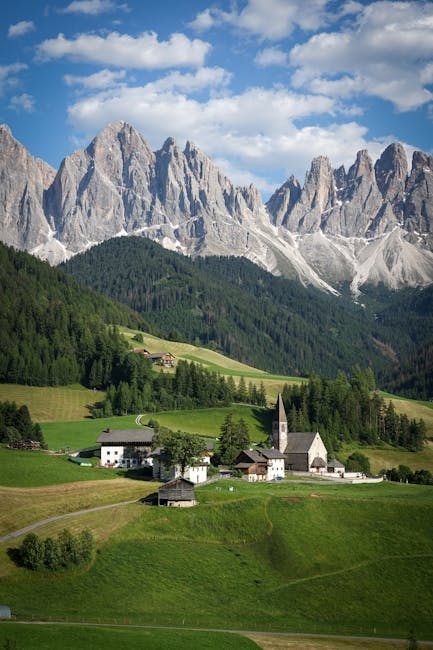
Val di Funes (Villnöß) is often celebrated for its iconic panorama where the steeples of Santa Maddalena (St. Magdalena) stand out against the Geisler (Odle) cliffs. This hamlet keeps a pastoral, intimate feel once you move away from the tourist car parks. The main church to visit is the Chiesa di Santa Maddalena, located at the exact address: Via Santa Maddalena 1, 39040 Funes (BZ), Italy. Entrance to the church is free, but it’s customary to leave a small donation (€1–5) for maintenance.
Opening hours: the Chiesa di Santa Maddalena is generally accessible from 08:00 to 18:00 in season (April–October); winter access can be limited because of snow, so check with the Funes Tourist Information (Tourist Information Funes – Via Principe di Napoli 8, 39040 Funes, Tel. +39 0472 843 000) for seasonal hours. The church is small but incredibly photogenic at sunrise when golden light kisses the wooden gables and meadows.
Immersive description: imagine standing in the small square before the church, the scent of freshly cut hay mixed with pine in the air as the Geisler peaks blush pink. Wooden houses with steep roofs, moss-lined stone paths and rustic fences make for a scene of almost sacred simplicity. Inside, modest frescoes and oak pews speak of a rural religious life that has changed little over the centuries.
Local practical tips: arrive early (between 06:00 and 08:30) to shoot unobstructed photos and catch the alpenglow on the Odle. Park in the official lot « Parkplatz St. Magdalena » (Via Santa Maddalena — a small free lot with limited spaces) and explore on foot; the lanes are best enjoyed slowly. Bring waterproof shoes in spring and autumn; paths can be muddy after rain. For a warm break, stop at the Gasthaus Zum Hirschen (Via Funes 12, 39040 Funes): traditional dishes from €12, open 11:30–21:00 (closed Wednesdays). Try the Speckknödel (smoked bacon dumpling) with a glass of local Müller-Thurgau.
 Click here to book a professional photo session in the Dolomites

San Vigilio di Marebbe and the Ladin hamlets: traditions that endure
San Vigilio di Marebbe (Sankt Vigil in Enneberg), located in the autonomous Province of Bolzano, is less busy in summer than neighboring resorts but holds Ladin hamlets where language, cuisine and crafts persist. The visitors’ hub is the Chiesa Parrocchiale di San Vigilio at Via Roma 10, 39030 San Vigilio di Marebbe (BZ). The church is usually open from 09:00 to 17:00, free entry.
Nearby are the small villages of La Pli (La Pli in Ladin) and Badia (Abtei), where you can still see barns decorated with traditional paintings and balconies overflowing with summer flower pots. Visitors should stop at the Museo Ladin Ursus ladin Dolomites to learn about local culture: Via Sant’Osvaldo 2, 39036 San Cassiano (BZ). Indicative fee: €6 per adult, open 10:00–17:00 (closed Mondays off-season).
Immersive description: in the morning the valley fills with quiet sounds: cow bells, murmured Ladin, wisps of smoke rising from chimneys. Houses often cluster around a courtyard and terraced fields where old varieties of apples and beets are still grown. Elderly women, often wearing aprons, might be spinning wool or making strudels during local festivities; if you ask politely you may get to watch these demonstrations.
Local practical tips: in summer, favor hikes from the Passo delle Erbe (Würzjoch) for quieter trails and views of the Sella and Puez ranges. For an authentic food experience, reserve a table at the Malga S. Elisabetta (a traditional alpine hut): Località Malga, 39030 San Vigilio di Marebbe; meals €10–20, opening varies (May–October); phone for reservations +39 0474 500 600 (indicative — confirm locally). Bring euros in cash for small refuges that don’t always accept cards.
Click here to book a full-day hike in San Vigilio
Sauris-style hamlets in the Dolomites: forgotten trails and stone refuges
Although Sauris is traditionally linked to Carnia rather than the Dolomites’ main tourist core, comparable hamlets in the eastern Dolomite area share the same atmosphere: small refuges, local bakeries and cheesemakers. One refuge to mention in this category is Rifugio Fodara Vedla, Località Fodara Vedla, 39030 Livinallongo del Col di Lana (BL). Exact address: Località Fodara Vedla, 32020 Passo Pordoi (BL) — note that refuge names and locations can vary by trail. Indicative prices: refuge meals €12–22, dorm beds/night €30–50 depending on season. Hours: generally open 08:00–20:00 in high season, closed or reduced in low season.
Immersive description: reach the hut after a walk through larch forests and suspended pastures. The scent of damp wood and hot soup welcomes you; inside, larch planks, old photos of mountain guides and hand-sketched maps reveal the history of these alpine pastures. If you stay overnight you’ll hear the wind over slate roofs, the clink of cutlery and occasionally hunters’ stories by the fire.
Local practical tips: always carry a small first-aid kit and a headlamp if you plan to stay the night. Huts often ask you to call ahead to reserve a dinner spot; reservation number for Rifugio Fodara Vedla (booking): +39 0436 867 234 (indicative — check online before you go). Trails between Passo Pordoi and Passo Fedaia offer panoramic alternatives — start early to avoid midday heat and bring plenty of water; sometimes fountains are the only water source between huts.
Fassa Valley: high-altitude villages and local craftsmanship
Val di Fassa is dotted with lesser-known villages; while Canazei sits on main routes, pushing into the mountain hamlets reveals discreet treasures: Vigo di Fassa (Vich), home to the parish Chiesa di San Giovanni (Via Dolomiti 4, 38039 Vigo di Fassa TN), and workshops where wood is still carved by hand. The church is open to visitors 09:00–17:00 in high season, self-guided (donations €1–3 recommended).
Immersive description: meandering Vigo’s lanes at dusk, you’ll smell pine and hear the creak of restored carts. Local artisans turn blocks of wood into useful and decorative items: spoons, frames and traditional toys. Family-run craft shops — often on the ground floor of houses — close early (usually by 18:00); use meal hours to chat with owners and sometimes catch a live demonstration.
Local practical tips: for a culinary immersion, visit Trattoria Alla Vecchia Stua (Via Meida 12, 38036 Pozza di Fassa TN): typical dishes €14–28, service 12:00–14:30 and 19:00–22:00 (reservation recommended). If you prefer a guided experience, the Centro Visitatori Dolomiti UNESCO – Pozza (Via Dolomiti 6, 38036 Pozza di Fassa) occasionally runs woodcarving workshops and guided hikes; workshop fees €15–25, hours vary by season.
Click here to join the Great Dolomites tour in Fassa

Marmolada and Malga Ciapela: glacier, cableways and restored silence
The Marmolada, the « king of the Dolomites, » has lesser-visited access from the Malga Ciapela side (known for the ascent to the glacier). For a quieter, more secret side, explore secondary trails and the hamlet of Malga Serauta near the Funivia Marmolada (Via Contrin, 32020 Malga Ciapela, Rocca Pietore (BL)). The Marmolada cable car — the gateway to the Great War museum and the glacier viewpoint — costs roughly €35–45 for a round trip depending on season. Hours: 09:00–17:00 in summer (subject to change — check opening times).
Immersive description: moving away from the main flow you’ll find shepherd huts where milk is turned into typical cheeses. Trails winding around the ravines lead to a silence you can almost touch, broken only by waterfalls and the distant cry of a raptor. Near the glacier the palette hardens: rock greys, snow whites and the deep blues of crevasses. The small Museo della Grande Guerra sulla Marmolada sits at the top and documents soldier life in these mountains; address: Rifugio Serauta, 32020 Passo Fedaia (BL). Museum fee: about €6–8, open depending on cable car rotations.
Local practical tips: check glacier status and weather conditions before you go; crevasses are dangerous without equipment. Dress in layers even in summer and wear sturdy boots. For a break, Rifugio Fedaia (Passo Fedaia, 32020 Malga Ciapela) serves hot soups and daily specials (€10–20), usually open 08:00–18:00 in high season. Drive carefully on the road to Malga Ciapela — it’s often narrow and shrouded in morning fog.

Colle Santa Lucia and the forgotten setting of Cortina
Colle Santa Lucia, tucked beneath the Cinque Torri and Monte Pelmo massif, is a hamlet offering a peaceful alternative to the crowds of Cortina d’Ampezzo. The small sanctuary to visit is the Chiesa di San Nicolo (Piazza San Nicolò 2, 32020 Colle Santa Lucia, BL). The church is generally open 09:00–18:00 in summer, free entry. Nearby, Rifugio Nuvolau (on the trail towards the Cinque Torri) offers an exceptional sunset viewpoint; access: Sentiero 403, 32014 Cortina d’Ampezzo (BL). Refuge prices: meals €12–22, overnight stays €35–60 depending on season and type of lodging.
Immersive description: meadows above Colle Santa Lucia are dotted with rocks and alpine flowers. Old chalets, often subtly renovated, retain charred wood elements and local stone. The most magical hour is dusk, when the Cinque Torri glow golden and the air cools suddenly after a hot day. On quieter trails you might meet flocks of sheep guarded by sturdy dogs or shepherds happy to share cheese and a smile.
Local practical tips: plan your hike to Rifugio Nuvolau for late afternoon to catch the sunset; descending in the cool of night is easier with a headlamp. Parking in Colle Santa Lucia (Piazza del Municipio) sometimes requires a daily ticket (€2–5); opt for short-term parking and walk. For dinner, Osteria al Colle (Via Colle 5, 32020 Colle Santa Lucia) serves Venetian and mountain specialties, dishes €14–30, open 12:00–22:00 (closed some days off-season).
Click here to join a guided hike to the Cinque Torri
General tips for traveling responsibly and discreetly in secret villages
Exploring off-the-beaten-path villages requires a particular mindset: humility, patience and respect. Here are consolidated practical tips to get the most from your stay while preserving these places:
- Respect opening hours: many institutions (churches, museums, huts) close early. Always check opening times online or by phone before heading out.
- Cash payments: a large number of hamlets and mountain huts have limited card acceptance. Always carry €20–50 in cash for purchases, tips or small repairs.
- Pack the right gear: hiking boots, waterproof jacket, refillable water bottle, sunscreen. Mountain weather changes fast.
- Transport: a compact car makes it easier to tackle narrow mountain roads. Check local shuttle services (especially in high season) to avoid congesting parking areas.
- Language: learn a few phrases in Italian and, if possible, some Ladin or German (depending on the valley) — a simple thank-you opens many doors.
- Respect the environment: stay on marked trails, don’t take stones or artifacts, and carry your rubbish to an official bin.
- Photography: ask permission before photographing people, especially in places of worship or private events.
Conclusion: the quiet magic of the Dolomites off the beaten track
The Dolomites’ secret villages offer an experience far removed from mass tourism: a journey through time, encounters with rooted ways of life and a string of views that stay with you long after you leave. Visiting these places requires preparation and respect for local communities, but the reward is immense: near-private landscapes, authentic flavors and a mountain intimacy few places in the world still offer.
Every village mentioned here — Santa Maddalena in Val di Funes, the Ladin hamlets around San Vigilio di Marebbe, mountain huts like Fodara Vedla, the artisans of Val di Fassa, the secret proximity to the Marmolada glacier and the viewpoints of Colle Santa Lucia — has its own personality. The addresses, hours and prices provided are practical anchors for planning your stay, but the best way to respect these places is to check locally and adapt your behavior to local customs. That way, you’ll help keep these villages preserved and alive, rather than worn down by inappropriate visitation.
In short: travel with the desire to stop more often, to listen, taste and walk slowly. The Dolomites off the beaten track don’t reveal themselves in haste — they’re earned. Take the time to greet locals, pay fairly for services and bring back not superficial souvenirs but real stories. You’ll leave not just with striking photographs but with the rarer feeling of having understood a little more about life in the shadow of the pink walls — the true wealth of the Dolomites.
Click here to take a day trip from Venice

