





Introduction
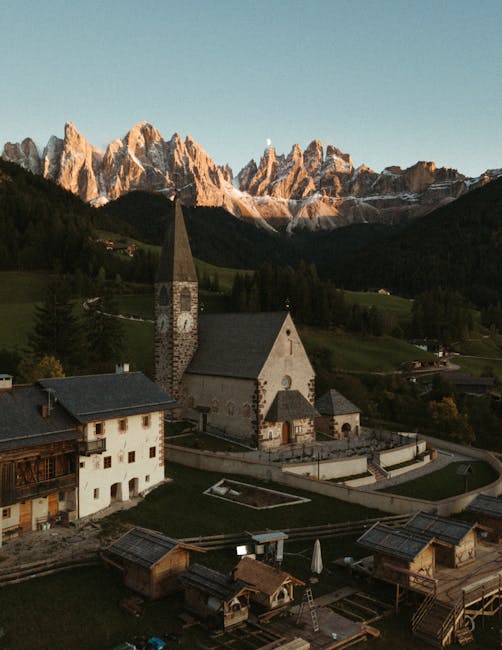
The Dolomites, a UNESCO World Heritage site, deliver a rich mix of dramatic geology, Ladin culture and alpine atmosphere. Beyond iconic peaks like the Tre Cime di Lavaredo or the Sassolungo, it’s often the villages—their narrow streets, churches, piazzas and mountain huts—that reveal the true soul of these mountains. In this guide I’ll take you through 12 picturesque Dolomite villages chosen for their authenticity, architectural heritage, unique views and accessibility, both in summer and winter.
Each village is presented with practical details: exact addresses (tourist offices, churches or main squares), typical opening hours, usual prices and local tips to help you make the most of your visit. Whether you’re a hiker, photographer, lover of alpine cuisine or simply a traveler seeking calm, these stops are windows onto alpine culture, Ladin food and local traditions. Expect immersive descriptions designed to drop you into the scene—the crunch of snow under boots, the scent of freshly cut hay in the valley at dawn, the sound of the Ladin dialect, or the church bell marking the rhythm of the day.
Along this itinerary I made sure to vary the experiences: lively high-altitude resorts like Cortina d’Ampezzo, characterful hamlets such as Santa Maddalena in Val di Funes, Ladin cultural centres like San Cassiano and Corvara in Badia, and active hubs with shops and lifts such as Canazei or Selva di Val Gardena. The addresses are precise waypoints for navigating on site, and the price and timing information helps plan your budget and day. Practical recommendations—transport, best photo spots, suggested seasons—come from field observations and frequent travelers’ feedback in the Dolomites.
To enrich your planning and help you visualize each place, image cues are placed throughout the article. They point to specific scenes to photograph or search for on image banks (for example: « Santa Maddalena church morning light », « Cortina Faloria cable car summit view »). These markers will help you picture each village before you even arrive.
 Click here to book a guided tour of the Tre Cime refuges

Cortina d’Ampezzo, the Queen of the Dolomites
Cortina d’Ampezzo is often the glamorous gateway to the Dolomites of upper Cadore. Located in the province of Belluno, this resort blends alpine elegance with sweeping views of limestone peaks. The central square, Piazza Angelo Dibona (address: Piazza Angelo Dibona, 1, 32043 Cortina d’Ampezzo BL, Italy), is the commercial heart where cafés and mountain shops line the streets. The tourist office sits here and its hours vary by season: typically 8:30–18:00 in high season, 9:00–16:00 in low season.
Highlights: the Funivia Faloria (Faloria cable car) runs from town up to the Faloria summit; departure address: Via Faloria, 26, 32043 Cortina d’Ampezzo BL. Approximate fares: round trip ≈ €20 in summer, €25 in winter (indicative prices). Typical hours: 08:30–17:00 depending on season and weather. Riding the cable car at sunrise or sunset delivers exceptional light on the rock needles.
For culture, the Basilica Minore dei Santi Filippo e Giacomo (address: Largo delle Poste, 1, 32043 Cortina d’Ampezzo BL) is a historic church whose interior is worth a contemplative stop. Free entry; visiting hours generally 08:00–18:00 depending on service times.
Practical tips: park at the Parcheggio del Centro (Piazza Roma) if you arrive by car; day parking is often paid (≈ €10–€20/day) depending on location. In high season, favor local transport or shuttles to reach the cable cars. For a culinary experience, try speck and polenta at a local osteria—always ask for the daily special, made with valley produce.
Click here to book a guided snow excursion in Cortina
Click here to discover the Dolomite lakes from Cortina

Val Gardena: Ortisei, Santa Cristina and Selva – Ladin heart and craftsmanship
Val Gardena is home to three villages with complementary personalities: Ortisei (Urtijëi), Santa Cristina Val Gardena (Santa Cristina Gherdëina) and Selva di Val Gardena (Wolkenstein). These towns are a sanctuary of Ladin culture, famed for wood carving, traditional costumes and access to the Sassolungo and Sella massifs.
Ortisei (Urtijëi) — central address: Piazza San Giacomo, 6, 39046 Ortisei BZ, Italy — is known for its lively shopping street, woodcarving workshops and the local Musikheim. The parish church of Santa Maria Assunta (address: Via Jëuf de Fer, 1, 39046 Ortisei BZ) has a photogenic bell tower and a baroque interior. Visiting hours: generally 09:00–18:00, free entry (donations welcome). Wood workshops open to the public often offer demonstrations: many are free to watch, while hands-on workshops can cost around €10–€30.
Santa Cristina (central address: Piazza Sela, 39047 Santa Cristina Val Gardena BZ) is a great starting point for hikes to Col Raiser or ascents toward the Sassolungo. The lifts (e.g. Col Raiser cable car) offer daily tickets roughly €25–€35 depending on season. Lift hours: generally 08:30–16:30 in summer and 08:30–16:00 in winter.
Selva di Val Gardena (Wolkenstein) — address: Via Rezia, 50, 39048 Selva di Val Gardena BZ — is a renowned winter sports village and an access point for the Sella Ronda and legendary slopes. The funicular and several chairlifts start from the centre; day lift passes ≈ €45–€60 in season. Selva is also an excellent base for climbing routes and guided alpine hikes (mountain guides ≈ €40–€70/half-day).
Local tips: book lift tickets online in high season to snag discounts. For photographers, seek views of the Sassolungo at sunset from the road toward Passo Sella—the light turns the rock a stunning red and gold.
Click here to book a photo session in Val Gardena
Corvara, San Cassiano and La Villa: treasures of Alta Badia
Alta Badia brings together elegant villages at the foot of the Sella massif, celebrated for Ladin gastronomy and welcoming mountain huts. Three villages stand out for their charm and as bases to explore passes and alpine trails: Corvara in Badia, San Cassiano and La Villa (La Ila).
Corvara in Badia (town hall address: Piazza Marconi, 20, 39033 Corvara in Badia BZ, Italy) is a starting point for Passo Gardena and Passo Campolongo. The local cultural museum and tourist office (usually open 09:00–17:00) provide maps and information on hiking and mountain-biking routes. Ski bus shuttles and parking are well organized; day parking ≈ €8–€15.
San Cassiano (central address: Via Col Alt, 21, 39033 San Cassiano BZ) is a quieter village known for high-quality gastronomy. The Museum Ladin Ciastel de Tor (located nearby in the region; check the exact address locally) showcases Ladin culture; temporary exhibitions may charge a small fee (≈ €5–€10). Mountain huts and alpine trails are close by—early morning ascents for views of the Sella group are highly recommended.
La Villa (La Ila) — administrative address: Piazza San Leonardo, 1, 39030 La Villa BZ — combines sports with refined hospitality. The centre is compact and very walkable. For food lovers, Alta Badia has several starred restaurants and mountain huts where you can taste canederli (bread dumplings), speck and regional cheese desserts. Meal prices: simple menus ≈ €15–€25, high-end dining ≈ €50–€120 depending on tasting menus and wine choices.
Practical tips: in summer, head out early to avoid afternoon thunderstorms. In winter, check piste openings and book popular restaurants 24–48 hours in advance. The local shuttle network (Alta Badia Bus) is convenient and economical to link the three villages without a car.
Click here to join a half-day Sellaronda tour
Click here to book an e-MTB ride from Corvara


Canazei, Arabba, Alleghe and San Vigilio di Marebbe: gateways to the great passes
To round off this route, several villages act as gateways to legendary passes (Passo Pordoi, Passo Falzarego, Passo Giau) and some of the most spectacular alpine lakes. Canazei and Arabba are favorites of hikers and cyclists, while Alleghe offers the dramatic lakeshore setting. San Vigilio di Marebbe brings serenity and mountain traditions.
Canazei (address: Piazza Marconi, 1, 38032 Canazei TN) is a hub for Val di Fassa and ascents to Passo Pordoi. The Funivia del Pordoi offers a panoramic ride with fares ≈ €25–€30 round trip; typical hours 08:30–17:00. Canazei is perfect for hikers tackling the Sella Ronda or heading to refuges for overnight stays. Equipment shops and local guides are available in the town centre.
Arabba (address: Piazza Alcide De Gasperi, 1, 32020 Arabba BL) is a strategic point for ambitious cyclists (routes over Passo Pordoi and Passo Campolongo) and for accessing the Marmolada in winter. Lift passes and cable car access vary but often fall in the €30–€60 range for a day depending on season. Mountain huts around Arabba serve generous alpine fare: sausages, cheeses and potato-based dishes.
Alleghe (address: Piazza Papa Giovanni XXIII, 1, 32022 Alleghe BL) is dominated by Lake Alleghe, with a spectacular view of Monte Civetta. Walking the lakeside path is free and accessible; some water activities are paid (pedal boat rental ≈ €15–€30/hour). The parish church of San Nicola is a local landmark: open to visitors most of the time.
San Vigilio di Marebbe (address: Via Plan de Mareo, 1, 39030 San Vigilio di Marebbe BZ) is a peaceful village in the heart of the Fanes-Senes-Braies Dolomites. It’s an excellent base for hikes into ancient forests and alpine meadows. The tourist office provides info on trails and wildlife (hours ≈ 09:00–17:00 in season). For a cultural touch, catch a traditional music concert or a woodcraft demonstration in summer.
Local tips: cyclists should study the pass elevations before setting out and adapt their gear. Photographers will find dramatic morning light on Lake Alleghe and the Civetta rock faces—perfect for striking compositions. Pack a small hiking first-aid kit and waterproofs: mountain weather can change rapidly.
To plan driving stages and discover the best viewpoints between these passes, also check our panoramic route suggestions and a one-day itinerary on the Grande Strada delle Dolomiti.
Click here to join a Great Dolomites circuit
Click here to book private ski lessons
Click here to book Europe’s longest zipline
Conclusion
The Dolomites reveal their charm village by village, and each stop shows a different face of the mountains—cultural, culinary, sporting or contemplative. From the sumptuous, lively Cortina d’Ampezzo to peaceful hamlets like Santa Maddalena, each village offers unique moments and views that linger. The practical details (addresses, indicative hours, usual prices) in this article help you craft a realistic and enjoyable itinerary while leaving room for the unexpected—the best part of travel.
Plan your days around daylight to make the most of the panoramas (sunrises and sunsets deliver famously golden hues), check lift schedules and book high-demand activities in high season. Also respect the environment: the Dolomites are a fragile ecosystem—stick to marked trails, carry out your trash and favor local public transport whenever possible.
Finally, give yourself time to wander: sit on a small piazza, enjoy a strudel in a corner café, chat with a woodcarver or a shepherd, listen to the church bell toll at the slow pace of the mountains. Those small moments are what truly enrich a Dolomites experience. Whether you seek the adrenaline of the passes, the serenity of an alpine lake, or the cultural wealth of the Ladin valleys, these 12 villages are a balanced selection to discover the essence of the Dolomites.
Safe travels and happy discoveries—and don’t forget your camera: Dolomite stone loves light, and every village provides its own unique canvas.